
Rajasthan is home to some of India's best wildlife destinations, and several of the finest are within a comfortable day trip or overnight excursion from Jaipur. We can arrange a car and driver for any of these through our car rental service - just let us know at the time of booking.
Ranthambore National Park
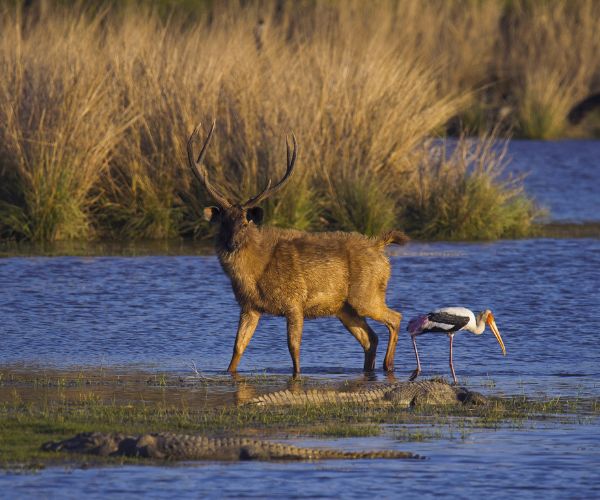
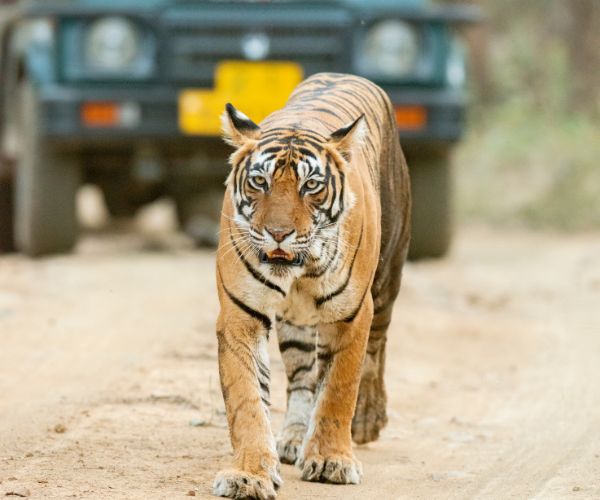
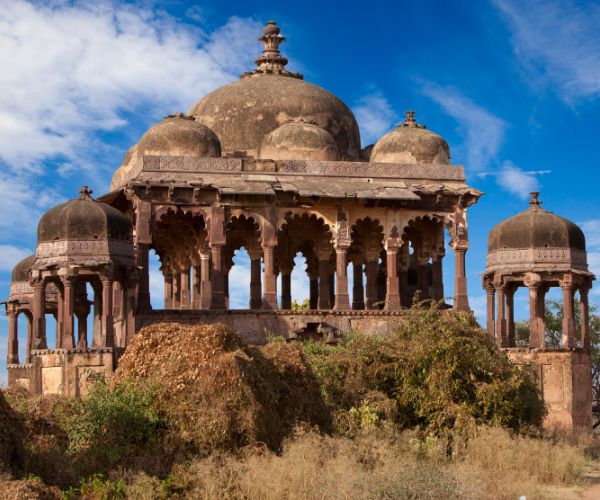
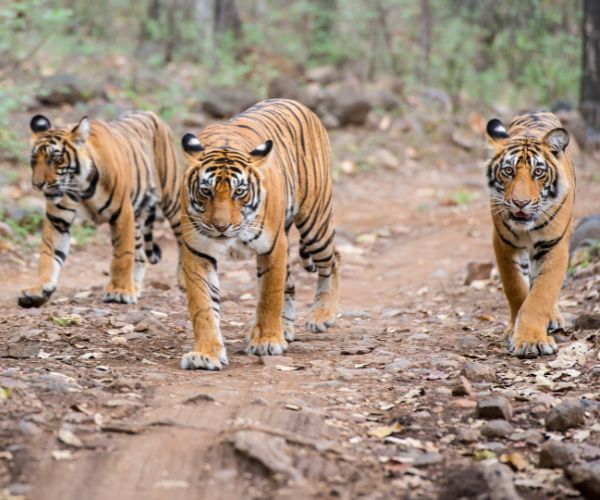
Ranthambore National Park spans about 410 sq km and is situated south-east of Jaipur on the way to Sawai Madhopur and Kota, about 180 km away from Jaipur. It falls under Project Tiger, so it has the Tiger (Panthera tigris) as its flagship species, besides Panther, Sloth Bear, Striped Hyena, Caracal, Rusty Spotted Cat, Jungle Cat, Indian Civet, Mongoose, Python, Monitor Lizard, Sambhar Deer, Spotted Deer, Blue Bull, Wild Boar, and over 350 recorded bird species across all seasons, including Painted Spurfowl, Painted Sandgrouse, Eurasian Eagle Owl, Indian Courser, and Yellow-wattled Lapwing. The forest is dry deciduous type, and on hill slopes it mostly consists of "Dhok" (Anogeissus pendula), "Salar" (Boswellia serrata), Babul (Acacia nilotica) and Ronjh (Acacia latifolia). The park has a few lakes - Raj Bagh, Milak Talab and Jogi Mahal Lake - which store water during the rainy season and are the main source of drinking water for the animals inhabiting the park. The park also has a strong and beautiful fort, and in the adjoining Man Singh and Kaila Devi sanctuaries, the wildlife is similar.
Ranthambore National Park is well connected by train, as it lies on the Delhi-Mumbai route (www.indianrail.gov.in, www.irctc.co.in) as well as by road. The nearest airport is Jaipur Airport.
Sariska Tiger Reserve
Sariska Tiger Reserve is the closest of the three to Jaipur - about 110-115 km away in the Alwar district, roughly a 2-hour drive, which makes it feasible as a long day trip. Established in 1979 as a Project Tiger reserve, Sariska is spread across dry deciduous forest and rocky hills of the Aravalli range, and is home to tigers (reintroduced here after the reserve's original population was lost to poaching in the mid-2000s), leopards, striped hyena, jackal, sambar and chital deer, and over 200 species of birds. The reserve also has several ancient temples and the ruins of Kankwari Fort within its boundaries, adding a heritage layer to the wildlife safari.
Keoladeo National Park (Bharatpur Bird Sanctuary)
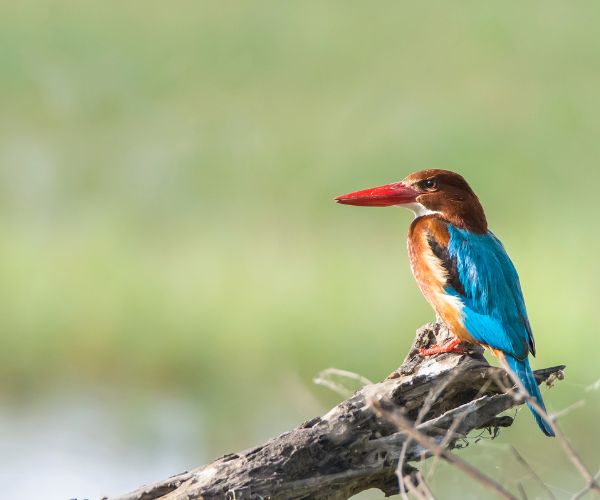
Keoladeo National Park, popularly known as Bharatpur Bird Sanctuary, is about 185 km from Jaipur (roughly 3 hours by road) on the way towards Agra, making it a natural stop if you're combining Jaipur with the Taj Mahal. A UNESCO World Heritage Site since 1985, Keoladeo is one of the world's finest birdwatching destinations, with hundreds of resident and migratory species recorded across its wetlands - herons, storks, cranes, pelicans and raptors among them. Unlike Ranthambore and Sariska, this park is explored on foot, by bicycle or cycle-rickshaw rather than by jeep, making it a relaxed, walkable wildlife experience. The best time to visit is between October and February, when migratory birds are present in the largest numbers.

Rated on TripAdvisor
Best Location Best Value Best Service
OUR OTHER TRAVEL WEBSITES
Rajaji National Park | Wild Brook Retreat